
Antigravity AI Directory vs AutomagicWP

Antigravity AI Directory
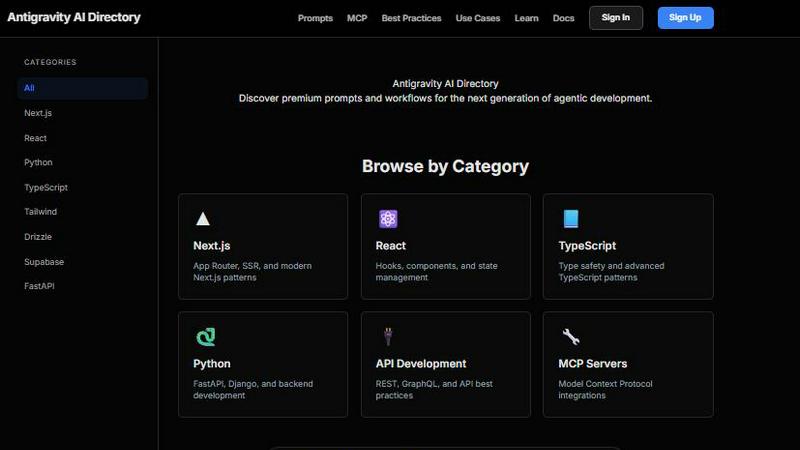
Discover the ultimate resource for developers with 125+ prompts and 430+ MCP servers to supercharge your Antigravity.
Last updated: February 28, 2026

Last updated: February 28, 2026
Visual Comparison
Antigravity AI Directory
AutomagicWP

Overview
About Antigravity AI Directory
Antigravity AI Directory is your ultimate resource for accelerating AI-driven development. Designed for developers and teams working with Google Antigravity IDE, this comprehensive directory features over 125 expertly crafted prompts and 430+ MCP servers tailored for Gemini 3 agentic development. Antigravity AI Directory aims to streamline the development process, enabling you to ship faster, code smarter, and build better applications with the help of advanced AI agents. Whether you are a seasoned developer or just starting out, the Antigravity AI Directory offers valuable tools and resources that foster innovative solutions across various programming languages such as Next.js, React, Python, TypeScript, and more. Dive into our expertly curated content to enhance your development projects and unleash the full potential of AI.
About AutomagicWP
AutomagicWP distributes WordPress plugins and themes. Upload a release once, connected sites update on their own through WordPress's native update mechanism. No logging into individual wp-admin dashboards.
The workflow it replaces: finish a build, package a ZIP, log into each client's site, upload it, confirm you want to replace the existing version, reactivate, next site. Once a year, fine. Once a month across twenty sites, not fine.
Releases track changelogs and PHP requirements. Plugin pages support icons, banners, and screenshots, so wp-admin looks like a proper product listing.
For automation: push a GitHub tag, the release ships. Need to integrate updates into your own tooling? There's a REST API. A Composer package hooks into native WordPress update checks on the client side.
Built for agencies managing client portfolios, solo devs tired of the ZIP loop, and anyone distributing a premium plugin or theme who wants distribution without a full commerce platform attached.
Alternatives
Antigravity AI Directory Alternatives
Antigravity AI Directory is an innovative platform designed for developers, offering a collection of MCPs and prompts that empower users to ship faster, code smarter, and build better with AI agents. It falls under the category of Dev Tools, making it a valuable resource for those looking to enhance their development processes with cutting-edge AI technologies. However, users often seek alternatives due to various reasons such as pricing structures, specific feature sets, or compatibility with their existing platforms and workflows. When exploring options, it’s essential to consider key factors like ease of use, the range of tools offered, integration capabilities, and overall value for your specific development needs. Finding the right tool can significantly impact your productivity and project success, so choose wisely!
AutomagicWP Alternatives
AutomagicWP is a developer tool that transforms how you distribute and update WordPress plugins and themes. It belongs to the category of automated deployment and update management solutions, designed to eliminate the tedious manual process of logging into multiple client sites. By handling distribution through WordPress's native update system, it brings a professional, hands-off experience to managing a portfolio of sites. Users often explore alternatives for various reasons. Some might need a different pricing model or a specific feature not offered, while others may require deeper integration with their existing commerce or CI/CD platform. The needs of a solo developer differ from those of a large agency, so flexibility and scale are key considerations. When evaluating an alternative, focus on core workflow efficiency. Look for solutions that automate the actual update delivery, maintain a professional presentation within the WordPress admin, and offer automation hooks like APIs or GitHub integrations. The goal is to permanently escape the repetitive "ZIP loop" and reclaim valuable development time.