
FAYFO vs Finsi OS


Finsi OS
Transform your e-commerce with AI that turns data chaos into actionable insights.
Last updated: February 27, 2026
Visual Comparison
FAYFO
Finsi OS
Overview
About FAYFO
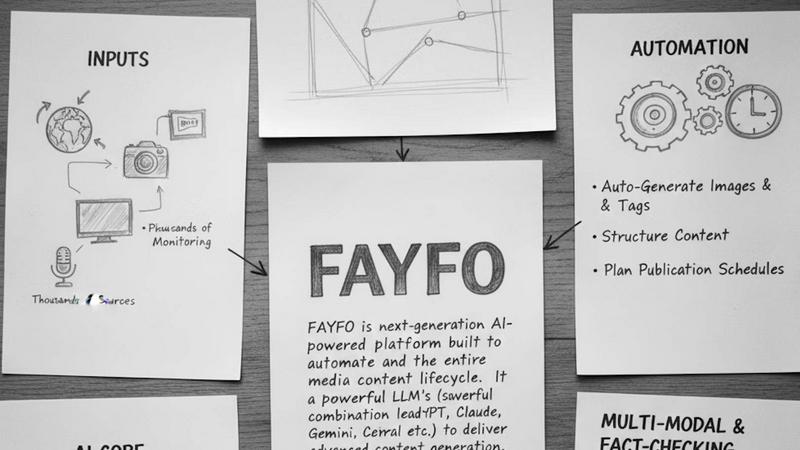
FAYFO is used on live media sites to replace and automate a significant part of newsroom production workflows, including monitoring, rewriting, enrichment, and publishing— through a multi-layered, cascading AI architecture purpose-built for media and social platforms.
FAYFO is not simple content generation. It is a complex production system combining cascading models, fine-tuned prompts, editorial logic, and dozens of custom media-specific functions. The result is content quality comparable to — and in many cases exceeding — traditional newsroom output, delivered at scale. The platform operates as a scalable “content factory” designed specifically for digital publishers. Targeting a €2.6Bn SAM within the global digital media market
On live media sites, FAYFO demonstrates:
- 70-% reduction in editorial costs
- 2–3× increase in content volume with the same resources
- 20+% quality uplift (structure, relevance, consistency)
- 80-% reduction in production time from source to publication.
About Finsi OS
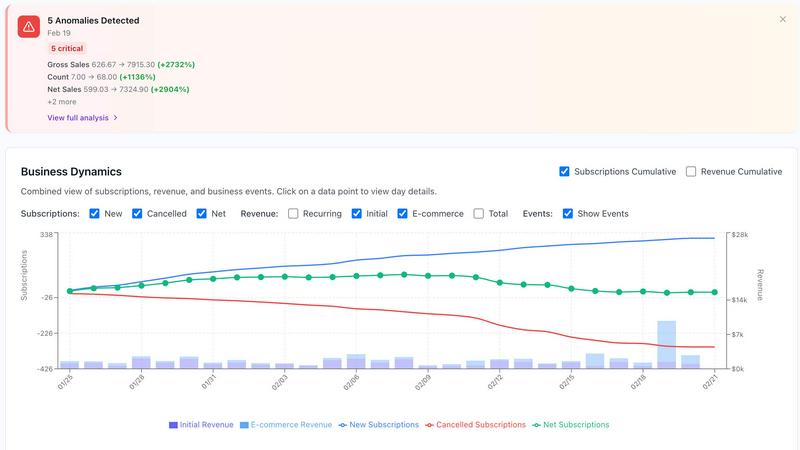
Finsi OS is an innovative AI Revenue Intelligence platform designed specifically for direct-to-consumer (DTC) brands, including e-commerce and subscription businesses. Its primary mission is to empower these brands to reduce customer churn and enhance customer lifetime value through intelligent automation. By integrating seamlessly with popular tech stacks such as Shopify, Recharge, Klaviyo, Stripe, and Chargebee, Finsi OS enables businesses to identify at-risk customers before they churn and automatically execute tailored retention strategies. With over 11 years of retention expertise from the team that scaled Scentbird to millions of subscribers, Finsi OS offers enterprise-grade capabilities suitable for brands of any size. Users can expect significant outcomes such as a 20% increase in lifetime value (LTV), a 50% reduction in customer acquisition costs (CAC), and a 30% savings in manual reporting time, all within the first 30 days of use.