
Lovalingo vs Oleno

Lovalingo
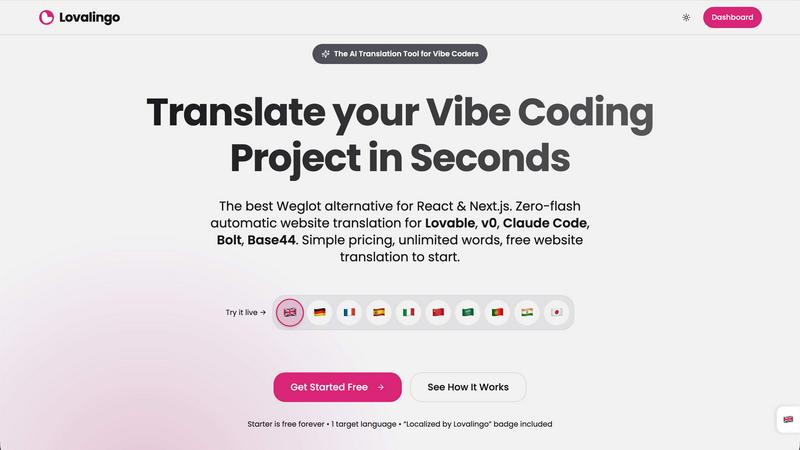
Translate your Vibe Coding projects in seconds with Lovalingo's seamless, auto-translation tool for React and Next.js.
Last updated: February 28, 2026

Oleno
Oleno transforms your expertise into high-impact content that drives SEO and engages every stage of your buyer's.
Last updated: February 28, 2026
Visual Comparison
Lovalingo
Oleno

Feature Comparison
Lovalingo
Native SEO
Lovalingo automatically generates essential multilingual SEO components such as sitemaps, hreflang tags, and meta descriptions. This ensures your site is indexed globally from the moment you launch, maximizing your reach and visibility.
Zero-Flash UI
Unlike traditional translation tools that manipulate the Document Object Model (DOM) after page load, Lovalingo translates content during the React render process. This results in a smooth user experience with no flickering or layout shifts, maintaining a professional appearance for your application.
Vibe-Coding Ready
Lovalingo is fully compatible with popular Vibe coding tools like Lovable, Bolt, and v0. With just one script, developers can instantly scale their applications to support any language, making it easier than ever to reach a diverse audience.
Zero Maintenance
Say goodbye to managing cumbersome JSON files. Lovalingo automatically detects routes and updates content in real-time, allowing developers to focus on building features rather than worrying about translation management and maintenance.
Oleno
Autonomous Content Creation
Oleno's autonomous content creation feature eliminates the manual effort typically associated with content operations. It automatically discovers topics, structures content, and ensures that every piece aligns with your brand voice, enabling continuous content production without traditional bottlenecks.
80+ Quality Assurance Checks
To maintain high standards, Oleno runs over 80 automated quality assurance checks on every article before publication. This feature ensures that the content is accurate, compliant, and free of errors, providing peace of mind that your business is represented accurately and professionally.
Integrated Publication Workflow
Oleno offers a streamlined publication workflow that connects your content from brief to distribution seamlessly. There are no handoffs between different teams or tools, allowing for a more efficient process that saves time and reduces the chance of miscommunication.
Demand-Gen Content Engine
As a demand-gen content engine, Oleno produces opinionated, on-brand content tailored for every stage of the buyer's journey. This feature addresses the growing content demands of marketing teams, ensuring that you create the essential pieces needed for SEO, customer education, and thought leadership.
Use Cases
Lovalingo
SaaS Founders Scaling to International Markets
SaaS founders looking to expand their product offerings to international users can utilize Lovalingo to easily translate their applications, ensuring a seamless experience for users from different linguistic backgrounds.
Agencies Building on Lovable
Web development agencies that utilize Lovable can leverage Lovalingo to streamline their translation process for client projects, enabling faster delivery times and a more robust multilingual support system without the need for manual intervention.
Developers Who Hate Manual i18n
For developers tired of the complexities and hassle of manual internationalization, Lovalingo provides an effortless solution. Its automatic translation capabilities free developers from the tedium of managing translation files and strings.
Businesses Seeking Global Reach
Companies aiming to enhance their global presence can benefit from Lovalingo's automatic SEO features and real-time content updates, allowing them to launch multilingual websites with confidence and speed.
Oleno
SEO Optimization
Oleno excels at generating SEO-optimized articles that rank high on search engines, helping businesses increase their organic traffic. By leveraging its autonomous capabilities, teams can consistently create content that aligns with SEO best practices.
Thought Leadership Development
With Oleno, companies can establish themselves as industry thought leaders by producing insightful and opinionated content. This helps organizations build credibility and trust with their audience, ultimately driving engagement and conversions.
Competitive Analysis Content
Oleno enables teams to create effective competitive content, such as "X vs. Y" comparisons, that not only informs potential customers but also positions your offerings favorably against competitors, enhancing your market presence.
Customer Education and Case Studies
Oleno also facilitates the creation of customer education materials and case studies, which are essential for building trust and demonstrating the value of your products or services. This use case is crucial for nurturing leads and converting prospects into loyal customers.
Overview
About Lovalingo
Lovalingo is an advanced AI translation tool designed specifically for Vibe coders, revolutionizing the way internationalization (i18n) is managed in web applications. By eliminating the tedious and error-prone process of manual JSON string translations, Lovalingo offers a seamless solution for developers aiming to scale their applications globally. It integrates directly with React and Next.js, enabling automatic, render-native translations that maintain layout integrity and enhance user experience. With Lovalingo, SaaS founders, agencies, and developers can say goodbye to SEO headaches and maintenance burdens. Instead of relying on outdated methods that often lead to broken layouts and incomplete translations, Lovalingo provides a streamlined, efficient way to achieve multilingual support, allowing businesses to expand into new markets effortlessly from day one.
About Oleno
Oleno is a revolutionary autonomous content engine designed specifically for programmatic SEO and enhancing visibility for LLM citations. Unlike traditional content tools that merely generate articles, Oleno offers a comprehensive system that discovers topics directly from your sitemap, grounding every piece of content in your existing knowledge base. This innovative engine structures content to not only rank well in search engines but also to gain citations from advanced AI models like ChatGPT, Perplexity, and Claude. With Oleno, your brand voice and sales narrative are seamlessly integrated into every article, and the platform runs over 80 quality assurance checks to ensure compliance and accuracy. By publishing directly to your CMS without the need for prompts, templates, or batch management, Oleno empowers B2B teams focused on organic growth. It effectively replaces the traditional content operations stack with a single autonomous system that amplifies visibility across various discovery surfaces, allowing you to focus on scaling smarter and closing the content gap.
Frequently Asked Questions
Lovalingo FAQ
How does Lovalingo handle SEO for multilingual websites?
Lovalingo automates the generation of critical SEO elements such as sitemaps, hreflang tags, and meta descriptions, ensuring that your site is optimized for search engines in multiple languages right from the start.
Can I use Lovalingo with any coding framework?
Lovalingo is primarily built for React and Next.js applications. It is fully compatible with Vibe coding tools like Lovable, Bolt, and v0, making it an ideal choice for developers in those ecosystems.
Is there a limit to the number of languages I can add with Lovalingo?
Lovalingo starts with support for 1-3 languages, but you can upgrade to the Global plan for unlimited languages. This ensures that as your business grows, your translation capabilities can scale with it.
How quickly can I set up Lovalingo for my project?
Setting up Lovalingo is incredibly fast. With just one prompt pasted into your AI coding tool, you can have your application live in over 20 languages within 60 seconds, eliminating the traditional setup headaches associated with multilingual support.
Oleno FAQ
What makes Oleno different from traditional content tools?
Oleno is a comprehensive autonomous content engine that not only generates articles but also discovers topics, structures content for SEO, and ensures that every piece is aligned with your brand voice and strategy, unlike traditional tools that focus solely on content generation.
How does Oleno ensure content quality?
Oleno employs over 80 automated quality assurance checks on every piece of content it produces. These checks cover accuracy, compliance, and adherence to your brand's standards, ensuring that the output is not only high-quality but also reliable.
Can Oleno handle different types of content?
Absolutely! Oleno is designed to produce a wide range of content types, including SEO articles, thought leadership pieces, competitive content, case studies, and social media posts, making it a versatile tool for diverse content strategies.
How does the publication workflow work in Oleno?
Oleno features an integrated publication workflow that connects every stage of content creation, from brief to draft to QA and finally to publication. This seamless process eliminates handoffs and miscommunications, allowing for efficient content operations.
Alternatives
Lovalingo Alternatives
Lovalingo is a cutting-edge auto-translate and index app designed to streamline the translation process for modern web applications. By eliminating the complexities of traditional internationalization (i18n) practices, Lovalingo empowers businesses to achieve seamless global scaling without the typical hassles associated with manual translation efforts. Users often seek alternatives to Lovalingo due to factors such as pricing, specific feature sets, or platform compatibility, as every organization has unique needs and objectives. When searching for an alternative to Lovalingo, it’s essential to consider several key factors: the ability to maintain native SEO practices, ease of integration with existing tech stacks, and the level of automation offered in translation processes. A suitable alternative should also provide a user-friendly experience and minimize manual maintenance, enabling teams to focus on growth rather than troubleshooting translation issues.
Oleno Alternatives
Oleno is an innovative autonomous content engine designed specifically for programmatic SEO and LLM citation visibility. By transforming knowledge into optimized articles, Oleno empowers B2B teams to enhance their organic growth and brand visibility effortlessly. Users often seek alternatives due to various factors such as pricing, feature sets, or specific platform needs that may not be met by Oleno. As businesses assess their options, they should prioritize solutions that align with their content strategies, offer robust quality assurance, and seamlessly integrate with their existing systems. When searching for an alternative, consider the scalability of the solution, the comprehensiveness of its features, and the level of automation it provides. Look for platforms that can enhance your SEO efforts while ensuring accuracy and compliance, as well as those that can adapt to your unique brand voice. The right choice will not only meet your immediate content needs but also support long-term growth and visibility in an ever-evolving digital landscape.