
RedVeil vs Rock Smith

Last updated: February 28, 2026

Visual Comparison
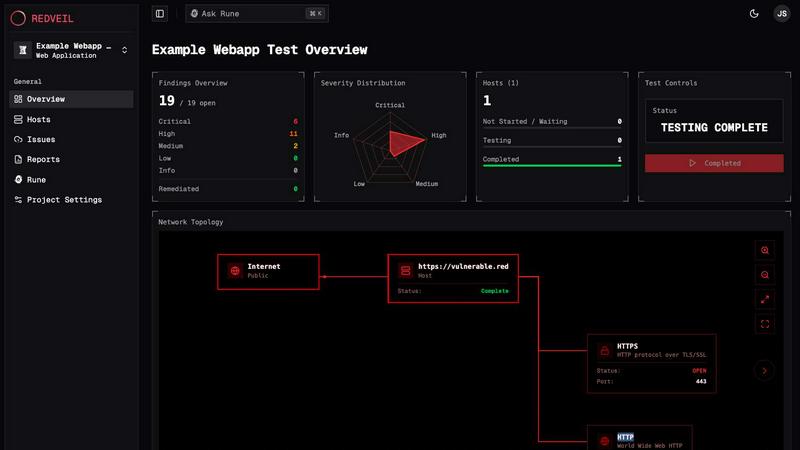
RedVeil
Rock Smith
Overview
About RedVeil
RedVeil is a groundbreaking AI-powered penetration testing platform designed to meet the fast-paced demands of modern software development. Traditional pentesting methods often take weeks and result in a costly one-time snapshot of your security posture. In contrast, RedVeil enables organizations to conduct comprehensive, autonomous penetration tests in mere minutes, providing actionable, audit-ready reports by the afternoon. This solution is perfect for engineering teams that deploy code daily and need real-time insights into their security vulnerabilities. With RedVeil, you get the human-like reasoning of an expert hacker combined with the rapid execution capabilities of advanced software, ensuring that your security assessments keep pace with your development cycles. This innovative tool not only enhances your security posture but also streamlines compliance with industry standards, making it an essential asset for any organization serious about safeguarding its digital assets.
About Rock Smith
Rock Smith - AI-Powered Black Box QA Testing
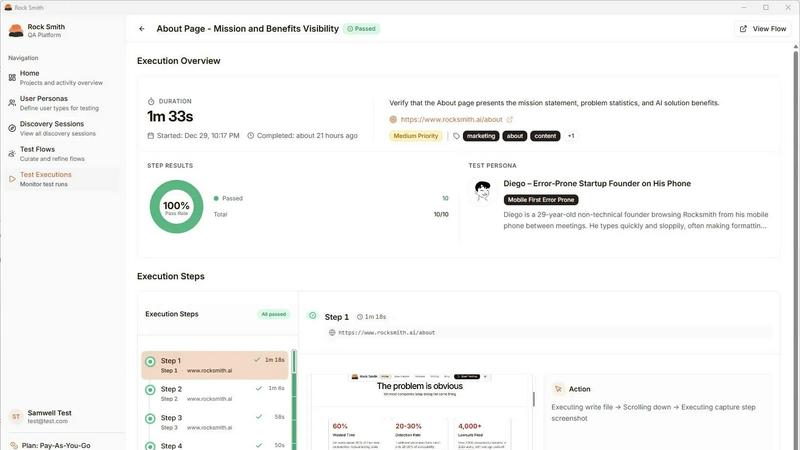
Rock Smith automates web application testing using autonomous AI agents that see and interact with your app the way real users do. Unlike traditional test automation tools that rely on brittle CSS selectors and XPath expressions, Rock Smith uses semantic element targeting—describing elements by visual appearance and context (like "the blue Submit button below the form") so tests self-heal when your UI changes.
How It Works
Create reusable test flows in natural language or let our Discovery engine automatically explore your site and generate tests from observed patterns.
Key Features
• Visual Intelligence – AI agents understand buttons, forms, and modals by appearance, not DOM structure
• Edge Case Generation – Automated fuzzing creates 14 scenario types including boundary values, XSS, and injection testing
• Test Personas – Simulate different user behaviors, from power users to first-time visitors.