
Finsi OS vs Rock Smith

Finsi OS
Transform your e-commerce with AI that turns data chaos into actionable insights.
Last updated: February 27, 2026

Visual Comparison
Finsi OS
Rock Smith
Overview
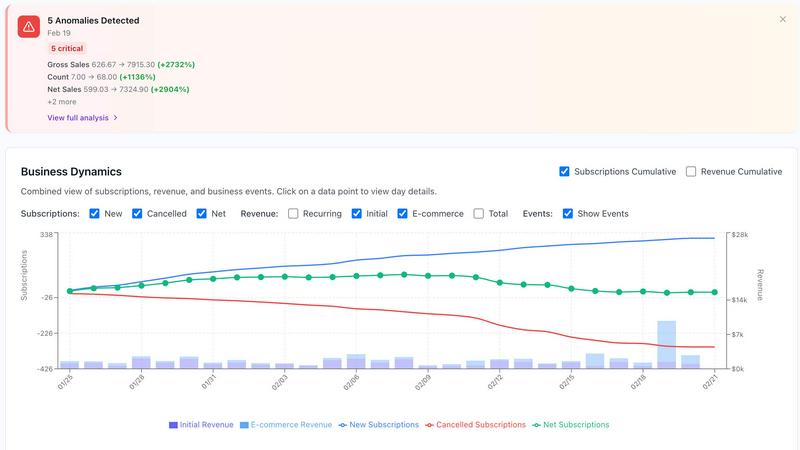
About Finsi OS
Finsi OS is an innovative AI Revenue Intelligence platform designed specifically for direct-to-consumer (DTC) brands, including e-commerce and subscription businesses. Its primary mission is to empower these brands to reduce customer churn and enhance customer lifetime value through intelligent automation. By integrating seamlessly with popular tech stacks such as Shopify, Recharge, Klaviyo, Stripe, and Chargebee, Finsi OS enables businesses to identify at-risk customers before they churn and automatically execute tailored retention strategies. With over 11 years of retention expertise from the team that scaled Scentbird to millions of subscribers, Finsi OS offers enterprise-grade capabilities suitable for brands of any size. Users can expect significant outcomes such as a 20% increase in lifetime value (LTV), a 50% reduction in customer acquisition costs (CAC), and a 30% savings in manual reporting time, all within the first 30 days of use.
About Rock Smith
Rock Smith - AI-Powered Black Box QA Testing
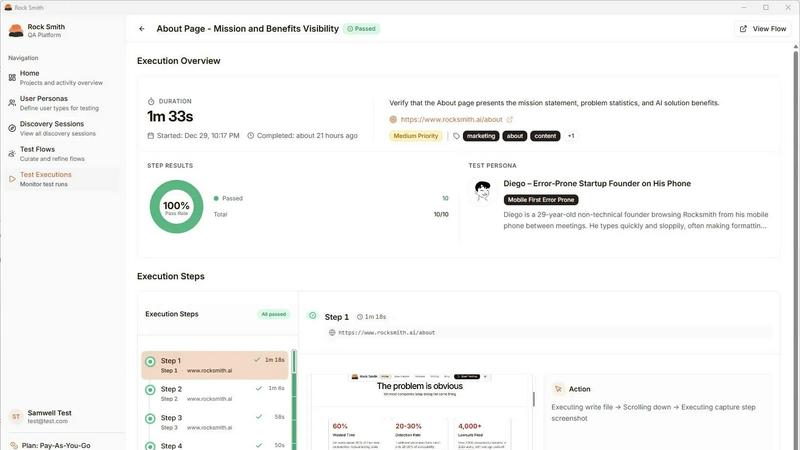
Rock Smith automates web application testing using autonomous AI agents that see and interact with your app the way real users do. Unlike traditional test automation tools that rely on brittle CSS selectors and XPath expressions, Rock Smith uses semantic element targeting—describing elements by visual appearance and context (like "the blue Submit button below the form") so tests self-heal when your UI changes.
How It Works
Create reusable test flows in natural language or let our Discovery engine automatically explore your site and generate tests from observed patterns.
Key Features
• Visual Intelligence – AI agents understand buttons, forms, and modals by appearance, not DOM structure
• Edge Case Generation – Automated fuzzing creates 14 scenario types including boundary values, XSS, and injection testing
• Test Personas – Simulate different user behaviors, from power users to first-time visitors.