Gaffa vs SoloPass


SoloPass
The Simplest Paywall for Digital Content
Visual Comparison
Gaffa
SoloPass
Overview
About Gaffa
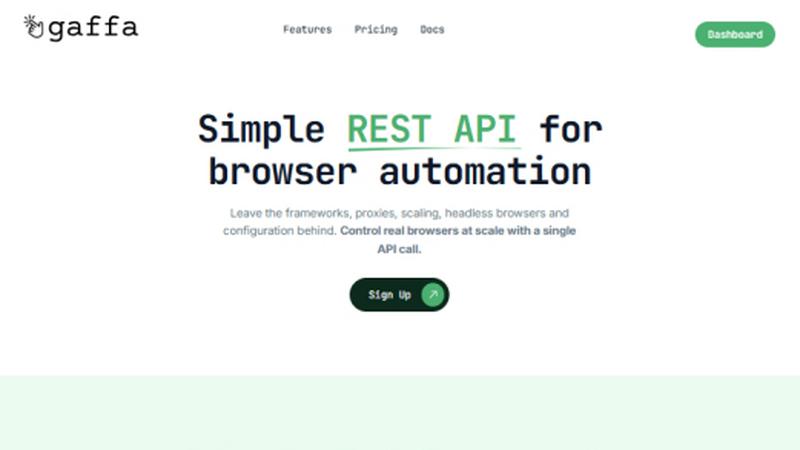
Getting reliable web data at scale is tough and getting harder all the time. Gaffa provides an API that makes it simple again. Gaffa will take care of all the complexity like residential proxies, scaling, infrastructure, failures and data parsing so you can concentrate on your business and not fixing broken scraping pipelines.
Using Gaffa's REST API you can send a single request to perform a huge number of actions like scrolling and clicking mimicking natural human browsing patterns as well as extracting page data as images, markdown, html or, using LLM, JSON.
Because Gaffa is designed to work even against the hardest to scrape sites it also has a stealth mode which uses real browsers, solves CAPTCHAs and uses residential proxies to ensure you get the data you need with minimum stress.
About SoloPass
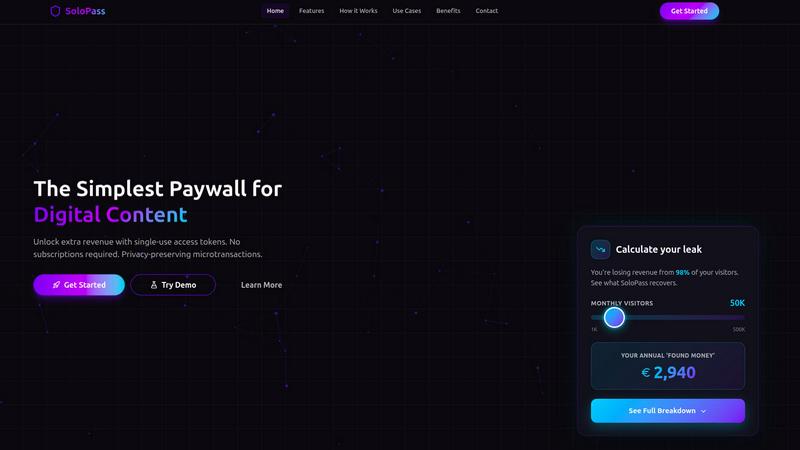
SoloPass is a privacy-first micropayment platform designed to help digital creators and publishers monetize individual pieces of content without requiring monthly subscriptions. The service allows users to purchase single-use access tokens for articles, videos, or downloads through a seamless, one-click payment process. A standout feature is its commitment to privacy, offering users the option to create anonymous 16-digit account numbers that require no personal data collection. Payments are handled via secure Open Banking APIs, which eliminates the friction of traditional credit card entry and reduces transaction fees. For publishers, the platform offers a "5-minute integration" that uses simple code snippets to protect content hosted on their own servers. It also includes AI-powered dynamic pricing that automatically adjusts costs based on demand to maximize revenue potential. Creators benefit from a hands-off financial model where SoloPass manages all payment processing, disputes, and settlements on an invoice basis.