
LUMI room planner vs Nano Banana 2

LUMI room planner
Transform your room photos into stunning layouts and styles effortlessly with LUMI's AI-powered room planner.
Last updated: February 28, 2026

Nano Banana 2
AI-powered image generation and editing platform
Last updated: February 28, 2026
Visual Comparison
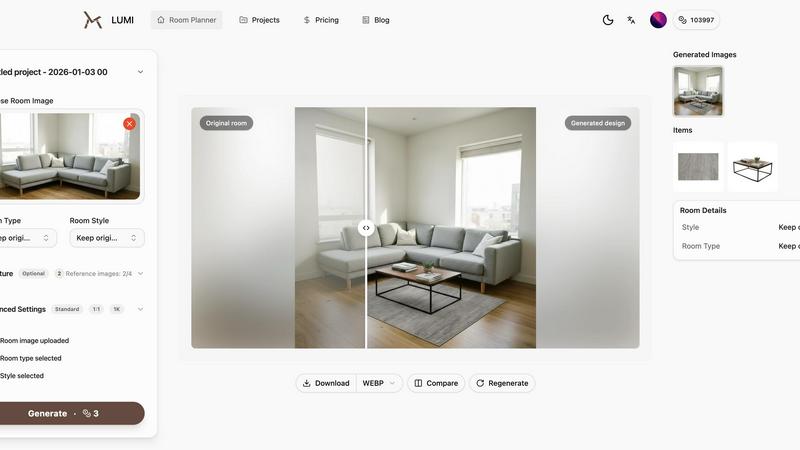
LUMI room planner
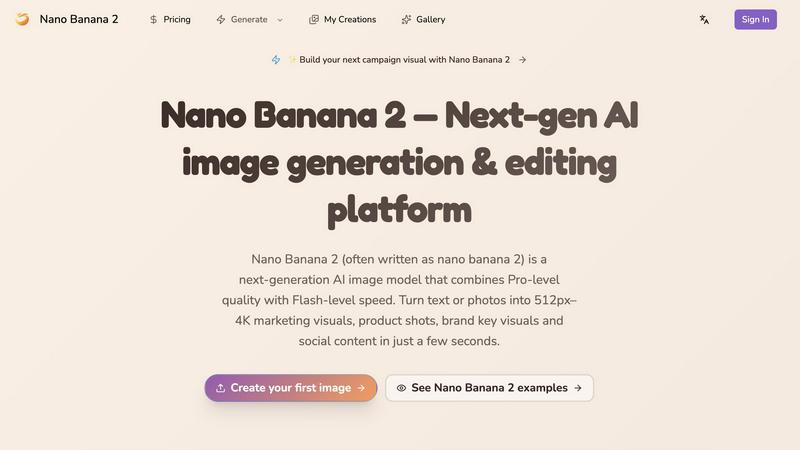
Nano Banana 2
Overview
About LUMI room planner
LUMI room planner is a cutting-edge AI tool designed to revolutionize the way you envision and design your living spaces. This photo-first platform allows users to transform real room photos into stunning, realistic redesigns without the hassle of measuring or complex floor plans. Perfect for homeowners, interior designers, and real estate agents alike, LUMI empowers you to explore various styles—from Scandinavian to modern minimalism—quickly and efficiently. By uploading a simple photo of your space, you can experiment with different furniture arrangements, swap out pieces, and generate photorealistic "before and after" renders within minutes. With LUMI, you can also export your designs in high-quality, watermark-free formats up to 4K, ensuring that every detail is captured beautifully. The intuitive and project-based workflow allows you to keep all iterations organized, making it easier than ever to visualize your dream space and share your ideas with family, clients, or contractors.
About Nano Banana 2
Nano Banana 2 is a next-generation AI image generation and editing platform built on Google's latest image generation model. It combines professional-level quality with lightning-fast processing speeds to transform text prompts or reference images into production-ready visuals.
Key Features
4K-Ready Image Quality: Generate images from 512px up to 4K resolution for ads, product pages, and app stores
Scene Understanding & Composition: Create complex scenes with plausible lighting, perspective, and layout using the model's world knowledge
Multilingual Text Rendering: Design visuals that mix English, Chinese, and other languages while maintaining readability
Local Editing & Re-rendering: Swap backgrounds, tweak lighting, or add/remove objects without breaking overall composition
Fast Generation & Batch Exploration: Explore multiple creative directions quickly for A/B testing and reviews
Built-in Creative Workflows: Work with galleries, projects, and exports instead of raw API calls
Prompting Tuned for Nano Banana 2: Use opinionated templates and settings optimized for the model to get strong results with fewer iterations
Alternatives
LUMI room planner Alternatives
LUMI room planner is an innovative, photo-first AI tool designed for those looking to transform their living spaces. This platform falls under the interior design category, allowing users to upload images of their rooms, select a design style, and customize their space with furniture changes, generating stunning photorealistic "before and after" renders in mere minutes. As exciting as LUMI is, users often seek alternatives due to various reasons such as pricing, feature sets, or specific platform compatibility. When looking for an alternative, it’s essential to consider factors like user-friendliness, the variety of design styles offered, customization options, and the quality of rendered images. Finding a tool that aligns with your needs can enhance your interior design experience and help bring your vision to life.
Nano Banana 2 Alternatives
Nano Banana 2 is an AI-powered image generation and editing platform that leverages Google’s cutting-edge image generation model. It stands out in the Image & Photo category, providing users with the ability to create stunning visuals from text prompts or reference images. However, users often seek alternatives due to factors such as pricing, specific feature sets, or the need for compatibility with different platforms or projects. When choosing an alternative to Nano Banana 2, it's essential to consider aspects like image quality, processing speed, collaboration features, and the flexibility of workflows. A good alternative should not only meet your creative needs but also seamlessly integrate into your existing processes, ensuring a smooth transition and continued productivity.