
Rallied AI vs Threat Modeling

Rallied AI
Rallied is an AI technician that autonomously resolves L1 and L2 tickets directly in your PSA or chat.
Last updated: April 4, 2026

Last updated: February 28, 2026
Visual Comparison
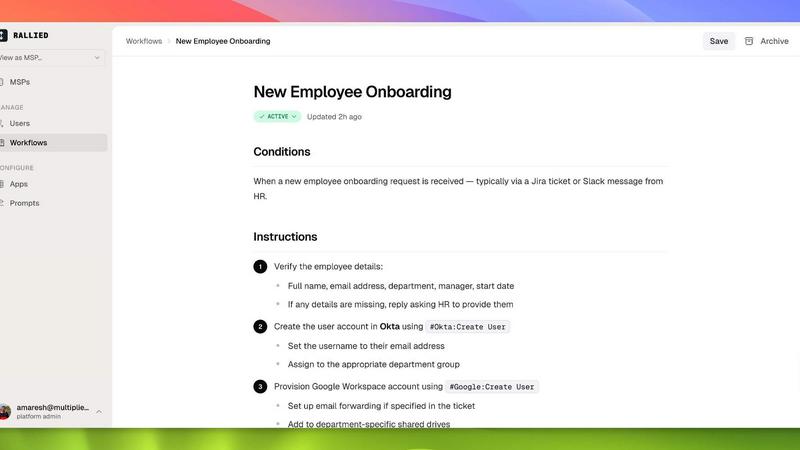
Rallied AI
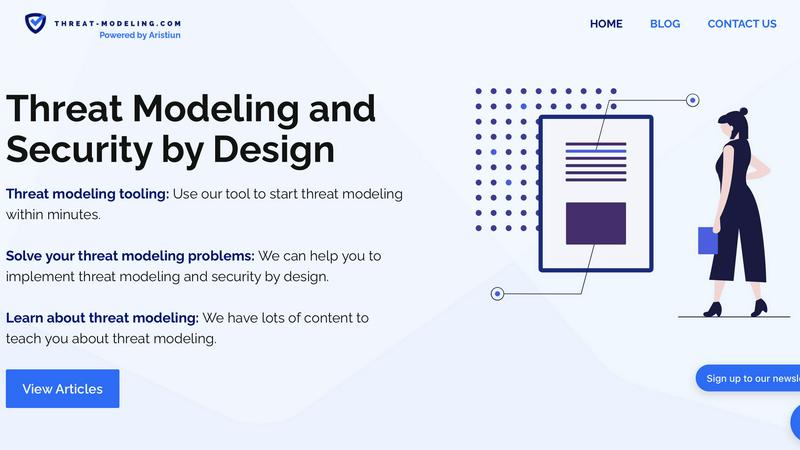
Threat Modeling
Feature Comparison
Rallied AI
Autonomous Ticket Resolution
Rallied doesn't just suggest next steps; it executes the complete fix. From detecting a locked Entra ID account to unlocking it, notifying the end-user, and closing the ticket in your PSA, it handles the entire workflow without human intervention. This covers a vast range of L1/L2 tasks like password resets, mailbox permission changes, group membership updates, and software installs, turning ticket queues from a burden into an automated process.
Intelligent Triage & Dispatch
Before a human tech even sees a ticket, Rallied can jump in. It asks the end-user clarifying questions to gather crucial details, automatically categorizes the issue, sets the correct priority, pulls relevant documentation from IT Glue or Hudu, and routes the ticket to the appropriate technician or queue. This feature ensures faster resolution times and frees your service desk from tedious triage work.
Seamless Collaboration via Chat
Interact with Rallied as if it were a top-tier technician on your team. Through native integrations with Slack and Microsoft Teams, you can assign it tasks, ask for status updates, or have it investigate issues via simple chat commands. This creates a natural, collaborative interface that requires no new software for your team to learn, making adoption frictionless.
Full-Stack Ecosystem Integration
Rallied is built to plug into your existing toolset, creating a unified command center. It connects directly to major PSAs like Autotask and ConnectWise, RMMs like Datto and Ninja, identity platforms like M365 and Okta, and documentation hubs. This deep integration allows it to take action across your entire stack with appropriate permissions, making it a central brain for your operations.
Threat Modeling
Powerful Assessment Engine
Our powerful assessment engine allows users to understand potential threats and security weaknesses effectively. It evaluates the system architecture, identifies vulnerabilities, and helps prioritize risks based on their impact and likelihood, ensuring that organizations can focus on what matters most.
Flexible Diagram Engine
The flexible diagram engine enables users to visualize components and communication flows seamlessly. This feature aids in representing complex systems intuitively, allowing teams to collaborate and communicate effectively about security concerns and design choices.
Clear Reporting and Metrics
Our tool provides clear reporting and metrics that are essential for compliance demonstration. Users can generate detailed reports that outline identified threats, mitigations, and risk assessments, helping organizations maintain transparency and accountability in their security practices.
Extensive Resource Library
We offer a comprehensive resource library filled with articles, templates, and real-world examples to support users in their threat modeling journey. This library is designed to educate teams on various threat modeling methods, ensuring that they are well-equipped to tackle security challenges efficiently.
Use Cases
Rallied AI
Automating Repetitive User Access Issues
Stop your L2/L3 engineers from wasting time on simple access tickets. Rallied autonomously handles the constant stream of "can't log in" requests, resolving password resets, multi-factor authentication unlocks, and VPN connectivity issues by directly interacting with Entra ID, Okta, or other identity providers. It executes the fix and communicates the resolution to the user, closing the loop instantly.
Streamlining Employee Onboarding & Offboarding
New hire on Monday? Instead of a manual, error-prone checklist across 5+ systems, simply message Rallied or create a ticket. It will automatically provision the M365 license, create the AD account, add the user to correct security groups, deploy the RMM agent, and update the PSA. For offboarding, it can schedule and execute access revocation and license reclamation seamlessly.
Efficient Ticket Triage & Knowledge Retrieval
Rallied acts as the perfect first line of defense for incoming tickets. It engages with the user to ask diagnostic questions, determines the priority and category, and automatically attaches relevant how-to guides or knowledge base articles from your documentation platform. This prep work cuts down triage time for human technicians dramatically.
Proactive License & Account Management
Beyond reactive tickets, Rallied can help manage your stack proactively. It can identify unused software licenses for reclamation, flag dormant accounts for review, and ensure compliance with group memberships. This use case turns Rallied from a support tool into a strategic asset for cost optimization and security hygiene.
Threat Modeling
Early Detection of Vulnerabilities
By employing threat modeling during the design phase, teams can identify and address vulnerabilities before they escalate into costly security incidents. This proactive approach minimizes risk and reinforces security from the outset.
Streamlining Compliance Efforts
Organizations can use Threat Modeling to demonstrate compliance with industry standards and regulations more effectively. The tool's reporting features provide the documentation needed to showcase security efforts to stakeholders and regulatory bodies.
Enhancing Collaboration Among Teams
Threat Modeling fosters collaboration between development and security teams by providing a common framework for discussing threats and mitigation strategies. This shared understanding enhances communication and aligns security objectives with business goals.
Integrating Security into DevOps Processes
With the rise of DevOps practices, integrating threat modeling into the continuous integration and continuous deployment (CI/CD) pipeline ensures that security remains a priority throughout the software development lifecycle, rather than an afterthought.
Overview
About Rallied AI
Rallied AI is the autonomous technician built specifically for MSPs, designed to stop margin from walking out the door. It's not just another chatbot or suggestion engine; it's a full-fledged AI agent that connects directly to your PSA, RMM, identity providers, and documentation platforms to autonomously resolve Level 1 and Level 2 support tickets. Imagine a tireless, expert technician who works 24/7, executing fixes for password resets, account unlocks, VPN issues, and onboarding tasks without human intervention. Rallied integrates seamlessly into your existing workflow, allowing your team to chat with it in Slack or Microsoft Teams like a real coworker, or simply let it work tickets directly in your PSA like ConnectWise or HaloPSA. Built for MSP owners and service managers drowning in repetitive tickets, Rallied delivers immediate ROI by reclaiming 50-100 hours of high-cost engineer time each month, enabling your best people to focus on project work and business growth instead of mundane tasks. Its promise is powerful: get connected and see it working autonomously in the same week, not next quarter, with no massive implementation fees or the need for a full-time AI administrator.
About Threat Modeling
Threat Modeling is a proactive approach in cybersecurity that focuses on identifying, understanding, and mitigating potential threats during the design phase of software development. By integrating security into the development lifecycle, organizations can prevent vulnerabilities from being introduced, thereby adopting a "security by design" philosophy. This tool is designed for developers, security teams, and organizations aiming to enhance their security posture without compromising agility. The main value proposition of Threat Modeling lies in its ability to streamline the identification of threats, assess risks, and implement effective security measures early on, ultimately reducing costs and reinforcing compliance. With our intuitive threat modeling tool, users can quickly visualize components and communication flows, evaluate potential threats, and generate reports that demonstrate compliance, making security an integral part of their development process.
Frequently Asked Questions
Rallied AI FAQ
What if it breaks something?
You maintain full control over Rallied's autonomy. During setup, you define exactly which workflows it can handle completely on its own and which require a human approval step first. As your confidence grows, you can gradually expand its autonomous scope. It operates within the permissions you set in your connected systems, acting as a supervised agent that learns your comfort level.
We've tried AI tools before and they were a trainwreck. How is this different?
Rallied is built on a fundamentally different principle: execution over suggestion. Many "AI" tools for MSPs are glorified chatbots that recommend an action, leaving the technician to do the actual work. Rallied is an AI technician that performs the action itself. It's designed for rapid deployment in a week, not months of configuration, and requires no full-time AI trainer on your staff to manage it effectively.
How quickly can we get Rallied up and running?
Incredibly fast. The process starts with a kickoff call to map your stack and scope initial workflows. Then, Rallied connects to your tools and can be deployed live in the same week. This is followed by a 30-day free trial where a forward-deployed engineer fine-tunes the system. The goal is to have it resolving tickets autonomously by Friday, not next quarter.
What kind of ROI can we realistically expect?
The ROI is direct and quantifiable. Most MSPs handle 200-400 L1/L2 tickets monthly, taking about 15 minutes each. This represents $7,000 to $15,000 per month in high-cost technician labor spent on repetitive tasks. Rallied automates a significant portion of this workload, reclaiming 50-100+ hours per month for your team to focus on billable project work and business growth, directly boosting your margin.
Threat Modeling FAQ
What is Threat Modeling?
Threat Modeling is a structured approach to identifying and addressing potential security threats in software design. It involves analyzing system architecture and workflows to proactively mitigate risks.
Who can benefit from using Threat Modeling?
Developers, security teams, and project managers can all benefit from Threat Modeling. It equips them with the tools and methodologies necessary to integrate security effectively into their development processes.
How does Threat Modeling improve security?
By identifying threats early in the design phase, Threat Modeling allows teams to implement security measures before vulnerabilities can be exploited. This proactive approach reduces the likelihood of costly breaches.
Is your threat modeling tool easy to use?
Yes! Our threat modeling tool is designed for ease of use, allowing teams to get started quickly. With intuitive interfaces and helpful resources, users can begin threat modeling within minutes, regardless of their experience level.
Alternatives
Rallied AI Alternatives
Rallied AI is a game-changing AI technician built for modern MSPs. It lives in the smart support automation category, connecting to your entire tech stack to autonomously resolve L1 and L2 tickets. You can chat with it directly in Slack or Microsoft Teams like a real team member, or let it work tickets hands-free in your PSA. Even with a powerful solution like Rallied, MSPs often explore alternatives for various reasons. This could be due to specific budget constraints, a need for different integration capabilities, or a platform requirement that better matches their existing workflow. It's a normal part of finding the perfect operational fit for your unique business. When evaluating other options, focus on core capabilities. Look for true autonomous resolution, not just ticket routing. Ensure it integrates deeply with your critical PSA, RMM, and communication tools. The ideal alternative should act as a force multiplier for your team, delivering tangible ROI by freeing up your human talent for more complex, strategic work.
Threat Modeling Alternatives
Threat Modeling is an essential practice in the realm of software development, focusing on identifying potential threats during the design phase. By integrating security from the outset, it allows teams to build robust defenses rather than adding security as an afterthought. As organizations strive for greater efficiency and protection, users often seek alternatives to traditional threat modeling due to factors such as pricing, feature sets, and specific platform compatibility. The quest for a suitable alternative may hinge on ease of use, integration capabilities, and the ability to adapt to a team's unique workflow. When searching for an alternative to Threat Modeling, it's crucial to consider not only the pricing structures but also the range of features offered. Look for solutions that prioritize proactive security measures and provide seamless integration into existing processes. Additionally, evaluate user feedback and support options to ensure you choose a solution that aligns with your team’s needs and enhances overall security without compromising productivity.